POPPIES FOR REMEMBRANCE
As November unfolds, red poppies are everywhere, symbolising those who have fallen in wars and conflicts, and playing an integral part in all Remembrance Sunday commemorations. At Loughborough Carillon, our Remembrance Sunday service always concludes with cascades of poppy petals from the balcony. It’s a dramatic and poignant moment.
Poppies don’t flower in November. So how did they come to be symbolic of the war dead, particularly those of World War 1?
Flowers of the battlefields
For my information I’m indebted to the wonderful book Where Poppies Blow, by John Lewis-Stempel. Subtitled The British Soldier, Nature, The Great War, it describes how serving men found solace and hope in the flora and fauna they encountered amongst the obscene destruction of the landscape.
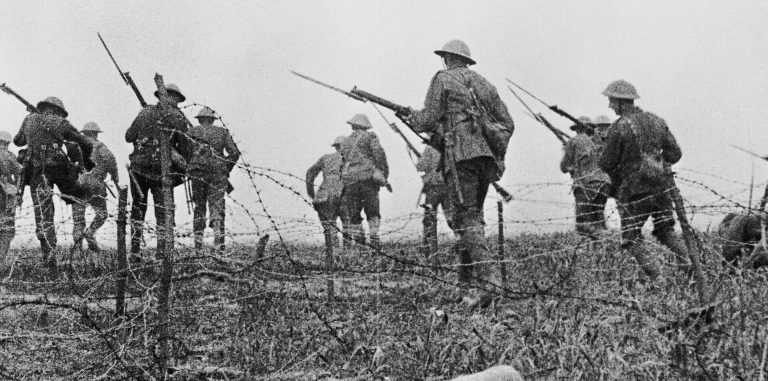
The red corn poppy wasn’t particularly abundant in Flanders (north west France), until 1915. The soil was too poor. The irony was that war created the perfect conditions for it to flourish. Artillery bombardment ploughed the fields and scattered the seeds. Nitrogen, as any farmer or gardener knows, is a potent fertiliser as well as being a component of high explosives. More gruesomely, this was enriched by the blood and pulverised bones of the men and horses who had been killed.
In Flanders fields
It was in the spring of 1915 that soldiers began to notice huge swathes of red poppies coming into flower. This phenomenon inspired Lieutenant Colonel John McCrae to write his immortal poem In Flanders Fields after the violent death of a close friend and comrade in the 2nd Battle of Ypres. Once published, it became an immediate success and the idea of fields in the Western Front ablaze with red flowers was etched in the collective memory.
IN FLANDERS FIELDS
John McCrae, May 1915
In Flanders fields the poppies blow
Between the crosses, row on row….
Poppies were not the only wildflower to benefit from this deadly fertilizer of warfare. Cornflowers, daffodils, anemones, daisies and buttercups flourished too. So why did the poppy become the symbol of remembrance?
The poppy is associated with sleep and anaesthesia. One species, the opium poppy, has been cultivated since ancient times for pain relieving substances and is a constituent of heroin, opium and morphine. On the WW1 battlefields, morphine was an essential tool in relieving the (often hopeless) suffering of the wounded. And the corn poppy, which flourished in the Flanders fields, is the colour of blood, while being, to those still alive, a sign of renewal.
The first Poppy Day
The history of the poppy as a symbol of remembrance began in America, and in the UK in 1921 when a French fundraiser, Anna Guérin, persuaded Field Marshall Douglas Haig, founder of the British Legion, to adopt the poppy as its emblem. Nine million pin-on silk poppies were sold on 11th November of that year, raising today’s equivalent of more than £3 million to help war veterans with work and housing. In 1922 a poppy factory was established in Richmond, offering job opportunities for veterans. It is still busy today, and there’s one in Edinburgh too. (Scottish poppies only have four petals, and no leaf).
In 2023 the first all-paper poppies were introduced, and this year, the poppies which shower down from the top of the Loughborough Carillon are made from 100% bio-degradable paper.