LOUGHBOROUGH CARILLON WORLD WAR TWO CASUALTIES: THE FIRST AND THE LAST
With the approach of the 80th Anniversary of VE Day, this post looks at the lives of two of the men serving in WW2, who are commemorated on the Carillon Loughborough. One was the first Loughborough casualty of the war, the other was one of the last. By a strange coincidence, both died in accidents which also killed many of their comrades.
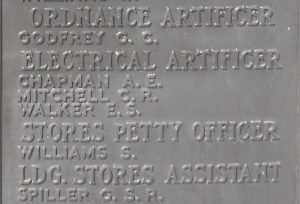
Electrical Artificer 1st Class Eric Shearstone Walker was born in Nottingham in 1st October 1904, and by 1911 the family had moved to Rosebery Street, Loughborough. Eric signed on for 12 years’ service in the Royal Navy on 11th October 1927, when he was 23. He married Beatrice Wheaton in 1936 and their son Graham was born the following year.
A maritime disaster
In December 1939 Eric was serving in HMS Duchess, a destroyer. The ship was an hour from Greenock, after a long voyage from China. At the outbreak of war, the flotilla she belonged to had been ordered home without delay. On the way, at Malta, three of the destroyers in the flotilla, including Eric’s ship Duchess, were detailed to escort the huge battleship HMS Barham from Gibraltar to Scotland.
136 icy deaths
12th December 1939 was a pitch dark night, with thick fog, and in such poor visibility, the Barham collided with the Duchess and she capsized. Her depth charges fired as she sank. Many of her crew were trapped, and a survivor remembered the heartrending sight of their terrified faces peering through tiny portholes. 136 sailors, including Eric Walker, perished, entombed in the ship or drowned in the icy, oily waters. All are remembered on the Chatham Naval Memorial.
Died the day after VE Day
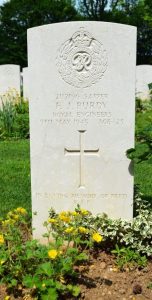
Sapper 2117196 Frederick James Purdy survived the war by just one day. He was born in 1920, lived in Shepshed, worked at William Moss, and in 1941 married Olive Priestley. He joined up around the same time. At the tail end of the war he was serving in Italy with the Royal Engineers, 626 Field Squadron. A fellow soldier from the squadron remembered the upbeat mood amongst the men on VE Day, “everybody thinking that there would be no more trouble and looking forward to peacetime again.”
“Cemetery to bury mates”
However, the following day some of them were put to work repairing a bridge near the village of Pontebba, northern Italy, which had been damaged by enemy action. Part of the bridge collapsed as they worked, killing Frederick Purdy and 22 others. Diary entries from another sapper in the squadron record the events in stark detail.
“9 May 1945. The main transom slipped and fell killing and injuring the sappers constructing the bridge.
10 May 1945. Cemetery to bury mates.”
Fred Purdy and his fellow Royal Engineers who perished in this accident are buried in Udine War Cemetery, Italy.
In addition to these two casualties, around another 200 men – and one woman – who died serving their country in WW2 are commemorated on the Loughborough Carillon. Research is ongoing into their lives and deaths as more documentation comes to light. Some of the men listed died a year or more after the end of the war. They didn’t die on active service but their demise may have been due to injuries or illness suffered during the war.